

Father's Day Traditions Around the World: How Different Cultures Celebrate

Because apparently, not everyone grills burgers and hands over a card
A few years ago, I was on a video call with a friend in Germany on the third Sunday of June. I wished him a happy Father's Day. He laughed and told me Father's Day in Germany had already happened, six weeks earlier, and that it involved men hiking through the countryside pulling wagons full of beer.
I had so many questions.
That conversation sent me down a rabbit hole I wasn't expecting. Turns out, Father's Day isn't a single global holiday with a shared meaning. It's celebrated on different dates, in wildly different ways, shaped by religion, history, and local culture. Some versions are deeply sentimental. Others are basically just an excuse for men to spend a day outdoors with their friends.
Here's what I found, and what genuinely surprised me along the way.

The United States: Ties, Grills, and Breakfast in Bed
Let's start with the familiar one.
In the US, Father's Day falls on the third Sunday of June. This year, that's June 15, 2026. It became an official federal holiday in 1972, though it had been observed informally since the early 1900s.
The story behind it is actually kind of moving. A woman named Sonora Smart Dodd from Spokane, Washington, wanted to honor her father, a Civil War veteran who raised six children alone after his wife died in childbirth. She pushed for a day to recognize fathers the same way Mother's Day recognized mothers.
The typical American celebration involves breakfast in bed, handmade cards from kids, backyard barbecues, and gifts ranging from heartfelt to hilariously practical. Neckties became such a cliché Father's Day gift that they're now almost a joke, but somehow they keep getting bought.
What I find interesting is how commercial it's become. The National Retail Federation estimates Americans spend billions on Father's Day each year. But talk to most dads, and what they actually want is simpler: time with their kids, a good meal, maybe a nap without interruption.
Germany: Männertag, The Day That's Basically a Hiking Party
This is the one that started my whole obsession.
In Germany, Father's Day is called Vatertag (Father's Day) or Männertag (Men's Day), and it falls on Ascension Day, a Christian holiday that occurs 39 days after Easter. That puts it sometime in May, not June.
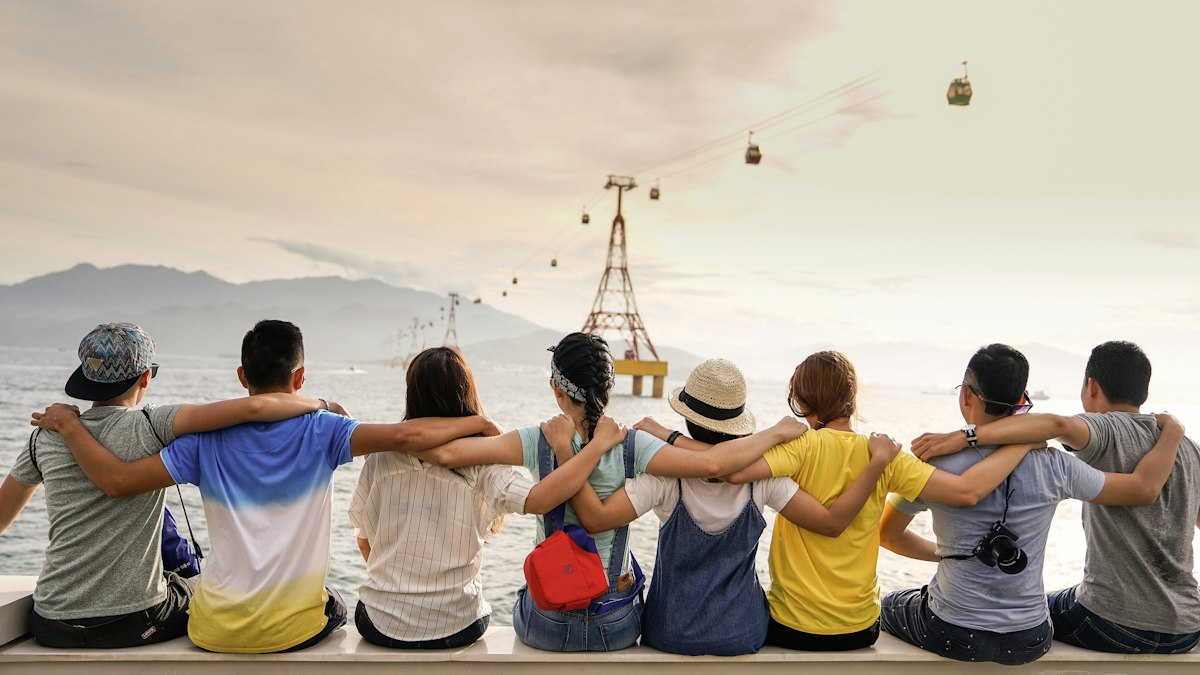
The tradition involves groups of men, fathers or not, heading out into the countryside on foot or by bicycle, pulling wooden wagons (called Bollerwagen) loaded with food, beer, and sometimes a portable speaker. It's less about honoring fatherhood and more about male camaraderie and being outdoors.
Women traditionally don't participate. It's considered a day for men to spend together.
I'll be honest. When I first heard this, I thought it sounded chaotic. But talking to Germans about it, there's something genuinely wholesome underneath the surface. It's about friendship, fresh air, and stepping away from daily responsibilities. The beer wagon is just part of the aesthetic.

Thailand: Father's Day Is the King's Birthday
In Thailand, Father's Day is tied directly to the monarchy.
For decades, it was celebrated on December 5th, the birthday of the beloved King Bhumibol Adulyadej (Rama IX), who passed away in 2016. He was seen as a father figure to the entire nation, and the holiday carried enormous emotional weight.
Since his passing, the date has shifted to honor the current king, King Vajiralongkorn (Rama X), whose birthday is July 28th.
On this day, Thais wear yellow, the color associated with the monarchy, and many families gather to honor both their fathers and the king. Public spaces are decorated, and it's common to see portraits of the royal family displayed prominently.
What struck me about this is how the personal and the national are completely intertwined. Honoring your father and honoring your country feel like the same act. That's a very different emotional register than the Western version of the holiday.
Brazil: Dia dos Pais, The Second Biggest Holiday of the Year
In Brazil, Father's Day (Dia dos Pais) falls on the second Sunday of August, and it is taken seriously.
Like, really seriously. It's considered one of the most commercially significant holidays in the Brazilian retail calendar, second only to Mother's Day. Families gather for large meals, children give gifts, and the day has a warm, celebratory energy that feels closer to a birthday party than a quiet appreciation day.
The holiday was introduced in Brazil in 1953, reportedly promoted by a São Paulo shopkeeper who wanted to boost August sales after the success of Mother's Day. Whether that origin story is fully accurate or not, the holiday took on a life of its own and became genuinely meaningful to Brazilian families.
What I find fascinating is how a holiday that started as a commercial initiative became something people actually feel deeply about. The intention behind a tradition matters less than what people make of it over time.
Russia: Defender of the Fatherland Day
Russia doesn't have a Father's Day in the traditional sense, but February 23rd, Defender of the Fatherland Day, functions similarly.
Originally a Soviet military holiday honoring the Red Army, it has evolved into a broader celebration of men and masculinity. Women give gifts to the men in their lives, fathers, husbands, brothers, colleagues. It's not exclusively about fatherhood, but fathers are very much included.
The gifts tend to be practical: tools, grooming products, socks (yes, really). The holiday has a slightly ironic, self-aware quality in modern Russia. People joke about the predictable gifts while still participating enthusiastically.
It's a good reminder that the form a holiday takes is shaped by history, not just sentiment.
Australia and New Zealand: September, Not June
If you have family in Australia or New Zealand and you call to wish them a happy Father's Day in June, you'll get a confused response.
Both countries celebrate Father's Day on the first Sunday of September. No one I've spoken to from either country seems entirely sure why. It's just always been that way. Some theories point to the Southern Hemisphere's seasonal calendar (September is the start of spring there), but there's no definitive historical explanation.
The celebration itself looks similar to the American version: family meals, gifts, quality time. But the September timing means it doesn't compete with the Northern Hemisphere's June holiday, which matters for families spread across both hemispheres.

Catholic Countries: March 19th, St. Joseph's Day
In many Catholic-majority countries, including Spain, Portugal, Italy, and several Latin American nations, Father's Day is celebrated on March 19th, the feast day of Saint Joseph, the earthly father of Jesus.
This version of the holiday has a much longer history than the modern American one. It's rooted in religious observance rather than commercial promotion, and in some regions it's treated as a genuine feast day with special foods, church attendance, and family gatherings.
In Italy, for example, Festa del Papà on March 19th is accompanied by a traditional pastry called zeppole, fried dough filled with cream. Bakeries sell them by the thousands. It's one of those food traditions that makes a holiday feel real and specific to a place.

What All of These Have in Common
Here's what I kept coming back to as I learned about each of these traditions.
Every culture has found its own way to say the same thing: fathers matter, and we should take a moment to acknowledge that.
The date changes. The rituals change. The food, the gifts, the level of sentimentality, all different. But the impulse underneath is the same.
Some versions are loud and communal (Germany's wagon parades, Brazil's big family meals). Some are quiet and personal (a handwritten card, a phone call to a dad who lives far away). Some are tied to religion, some to royalty, some to a shopkeeper's marketing idea that accidentally became meaningful.
None of them are wrong. They're just different expressions of the same human instinct.
If You're Celebrating This Year
Father's Day in the US, UK, and Canada is June 15, 2026, two weeks away as you're reading this. If you're still figuring out how to make the day meaningful, our guide on how to plan an outdoor Father's Day experience has some genuinely good ideas that don't require a big budget.
And if you're the kind of person who wants to go deeper on the history side, History.com's full breakdown of Father's Day origins is worth a read.
A few things worth considering for this year:
- Call instead of text. Or video call if you're far away. It takes five minutes and means more than you'd think.
- Be specific in what you say. "Happy Father's Day" is fine. "I've been thinking about how you taught me to change a tire and I still use that every year" is better.
- Do something, not just buy something. A walk, a meal cooked together, a drive somewhere. Experiences tend to land differently than objects.
- If your dad is gone, this day can be hard. It's okay to acknowledge that. Honoring his memory, talking about him with your own kids, or doing something he loved is a valid way to spend the day.
The German wagon full of beer. The Thai yellow shirts. The Italian zeppole. The Brazilian August feast.
Every tradition started somewhere, usually with someone who just wanted to say thank you to the person who showed up for them.
That part, at least, is universal.
Want to keep reading? Check out our guides on how to plan your first camping trip and the best day trips to take with your dad.


